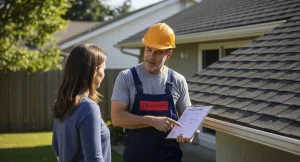
If a storm has damaged your Williamsburg roof, do three things before you sign anything: photograph the damage, stop any active leak with a temporary cover, and get an inspection from a licensed local roofer so you have your own record before the insurance adjuster arrives. Then read the contract carefully, because Virginia changes the rules for storm-related roofing work on January 1, 2027.
As a Williamsburg roofing company that has repaired storm damage across James City County and the Historic Triangle since 1989, we get the same handful of questions every time a front rolls through. When the cold front hit on March 16, 2026, the City of Williamsburg closed its offices early with gusts up to 75 mph in the forecast, and our phones at 1115 Professional Drive lit up the next morning. Here are the answers we gave.
What should you do in the first 48 hours after a storm damages your roof?
Start with safety, then evidence, then protection. Stay off the roof. Wet shingles and cracked decking are how homeowners get hurt, and a ladder in leftover gusts is worse. Keep well away from any downed line and report it to Dominion Energy.
Next, take photos before a single branch gets dragged to the curb. Shoot every side of the house, the yard, the attic if you can reach it safely, and any ceiling stains. Your phone stamps the date for you.
Then keep water out. Buckets handle a drip, but an open section of roof needs a tarp fastened by a roofer, and you should keep that receipt. Homeowners policies generally expect you to prevent further damage, so a small emergency cost now protects the claim later. Hold permanent repairs until the adjuster has seen everything. If you can’t tell whether a problem can wait, our post on the signs you need emergency roof repair sorts it out.
How can you tell if your roof is damaged when it looks fine from the yard?
Often you can’t, which is why a close inspection after a strong storm matters even on a roof that looks normal. Wind does most of its harm by lifting shingles, not tearing them off. When a gust breaks the adhesive strip under a tab, the shingle can settle back down and look perfect from the lawn. It is no longer sealed, though, and the next wind-driven rain can push water under it.
From the ground, look for shingle pieces in the grass, dark gaps in the pattern, bent metal around the chimney or vents, and heavy grit washed out at the downspouts. Inside, watch for new stains, a musty smell upstairs, or damp attic insulation. In wooded neighborhoods like Queens Lake, Kingsmill, and Ford’s Colony, limb strikes are what we find most. A branch that bounced off can crack shingles without leaving a mark on the lawn, which is also why we push a yearly roof inspection for Williamsburg homes under heavy tree cover.
Should you call your insurance company or a roofer first?
 Call R.A. Woodall Roofing in Williamsburg
Do both within a day or two, but get the roofer up before the adjuster arrives. Report the claim promptly, since most policies require timely notice and a long delay makes it harder to tie the damage to one storm. Stick to facts on that call: the date, what you saw, and where water came in. Don’t guess about the roof’s age or the cause.
The inspection matters because adjusters handle every kind of property loss, not only roofs, and a broken seal strip under a fallen limb is easy to miss on a quick walk. A roofer’s dated photos and written notes give you an independent record, and a good roofer will tell you honestly whether you’re looking at a simple roof repair or something bigger. Ask them to be present when the adjuster inspects. Before any of it, pull out your declarations page. Many coastal Virginia policies carry a separate wind or hurricane deductible, and that number decides whether filing makes sense.
Can a roofer legally pay or waive your insurance deductible in Virginia?
No. Starting January 1, 2027, Virginia’s new Residential Property Owners Protection Act says a contractor may not knowingly pay, waive, or rebate any part of the insurance deductible on an owner-occupied home. The same section of the Code of Virginia bars contractors from offering cash, credits, gift cards, or anything else of value in exchange for inspecting your roof or filing a claim, and it bans paid referrals for insurance-funded work.
Even before that date, a deductible deal you keep from your insurer can be treated as insurance fraud, and you are the one who signed the claim. The deductible is your share of the loss. A contractor who offers to make it vanish has to recover that money somewhere, either from your insurer or from corners cut on your roof. Neither is how you want a twenty-year roof to begin. When a neighbor tells us they got that offer at the door, our advice is short: say no and close the door.
What changes in 2027 when you sign a roofing contract after a storm?
Three protections take effect on January 1, 2027. First, a contractor who hands you an agreement for repairs under an insurance claim has to provide a good-faith estimate with itemized, detailed costs for labor and materials. Second, roofing contracts must carry a bold notice on the page you sign, telling you to confirm coverage, deductibles, and policy terms with your insurer before signing.
Third, if the Governor declares a state of emergency covering our area and you sign a roofing contract within 180 days of that declaration, you can cancel without penalty within 10 days of signing or before work officially starts, whichever comes first. The cancellation has to go by certified mail or another method that proves delivery. The practical lesson is the same one we have given for decades. Never sign on the spot. A reputable roofer expects you to call your agent first, and starting in 2027 the paperwork will tell you to do exactly that.
How do you check whether a roofer who shows up after a storm is legitimate?
Start with the license. A roofing job of any real size in Virginia requires a state contractor license, and you can confirm one in a couple of minutes with the DPOR License Lookup by searching the company name or license number. Make sure it’s active, note the class, and read any disciplinary history listed.
Then check the basics. A local office you can drive to, a written itemized estimate, and a warranty on paper all point to a company that will still be here when a warranty question comes up in five years. Out-of-state plates, cash-only pricing, and pressure to sign today point the other way.
Be wary of anyone who offers to negotiate your claim for you, too. Representing you to your insurer is public adjusting, which requires its own Virginia license. Our Williamsburg service area page lists the neighborhoods our crews work in every week.
Frequently Asked Questions
How soon after a storm should I get my roof inspected?
As soon as the weather clears and a roofer can walk it safely, ideally before the next rain. Small openings let water into the decking and insulation quickly, and early photos make the storm connection easy to document.
Will homeowners insurance cover storm damage to my roof?
Usually, when sudden wind, hail, or a falling tree caused it. Wear, age, and deferred maintenance are typically excluded. Check whether your policy pays replacement cost or actual cash value, since the second one subtracts depreciation for an older roof.
Do the new contract protections apply right now?
No. The Residential Property Owners Protection Act takes effect January 1, 2027. Until then, protect yourself the same way: verify the license, insist on an itemized written estimate, and refuse any deductible deal.
Do I need HOA approval to fix storm damage in Kingsmill or Ford’s Colony?
A like-for-like repair often goes ahead without review, but a full replacement or any change in color or material usually needs architectural approval. Call your association before materials are ordered so an approval wait doesn’t leave a tarp on the roof longer than necessary.
Get a Free Storm Damage Estimate
If the last storm has you wondering about your roof, call R.A. Woodall Roofing at (757) 220-6299 or email alan@rawoodallroofing.com. Alan and Nathan Woodall will get eyes on your roof, show you the photos, and give you a free, no-obligation estimate. You can also reach us through our contact page.
 Nathan and Alan Woodall – Family Roofing Business for 39 Years in Williamsburg VA
You may find these articles helpful:
This article is general information, not legal or insurance advice. Policy terms vary, so confirm coverage with your insurance agent, and speak with an attorney about how Virginia law applies to your situation.