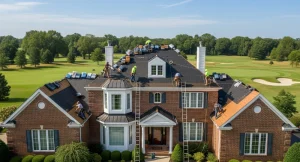
The right roofing contractor for a Williamsburg home is licensed at the correct class, has a real local track record in James City County, and can speak specifically to how HOA rules, coastal humidity, and storm exposure affect your property. Price matters, but it should never be the first filter. The questions below separate a contractor who will still answer your calls in five years from one who will not.
Is the Contractor Licensed to Work in Virginia?
Every roofing contractor working in Virginia should carry a license issued by the Virginia Department of Professional and Occupational Regulation, and the class of that license actually matters. DPOR requires a Class A license for any single project valued at $150,000 or more, a Class B license for projects between $30,000 and $150,000, and a Class C license for projects between $1,000 and $30,000. A Class A license carries no ceiling on project size and reflects a higher bar for experience, testing, and financial responsibility than the lower classes. You can verify any Virginia contractor’s license and class in a few minutes using DPOR’s public license lookup tool before you ever sign a contract. R.A. Woodall Roofing has held Class A contractor status since the company’s founding, well above what most residential roofing jobs require.
How Long Has the Company Actually Worked in the Williamsburg Area?
A contractor’s years in Williamsburg specifically, not just Virginia broadly, tells you whether they understand your neighborhood’s roof. Companies that have worked steadily in Williamsburg and James City County for decades have seen how a colonial-style home near Richmond Road and William & Mary ages differently than a newer build off Monticello Avenue or SR-199, or a golf-course property tucked into Kingsmill. That history also means they are easier to find if a warranty issue comes up years later, rather than a crew that worked one job in your area and never came back. Ask directly how long the company has worked in Williamsburg, not just how long the business has existed somewhere in Virginia, and ask for addresses of past jobs in your own neighborhood. A contractor with genuine local roots will answer that question without hesitating.
Will They Help You Navigate HOA or Architectural Review Approval?
Yes, a contractor experienced in Williamsburg should be able to walk you through your community’s architectural review process before work ever starts, not after. Communities like Kingsmill, Ford’s Colony, and Governor’s Land maintain their own rules on shingle color, material type, and even how a roofline can change, and getting that wrong can mean a stalled project or a forced redo. Ask a prospective contractor whether they have handled submissions for your specific community before, and ask to see an example of an approved application. R.A. Woodall Roofing has put together a full Williamsburg HOA roofing approval guide covering what Ford’s Colony, Kingsmill, and Governor’s Land homeowners specifically need to submit, because this step trips up more Williamsburg homeowners than almost anything else in the process.
Do They Understand How Coastal Humidity and Storm Exposure Affect a Historic Triangle Roof?
 R.A. Woodall Roofing Understands Storm Protection
A contractor worth hiring should be able to explain, without prompting, how proximity to the James and York River corridors changes what your roof needs compared to an inland Virginia home. Salt-tinged air, persistent humidity, and wind-driven rain off the rivers accelerate wear on shingles and flashing faster than in drier parts of the state, and that affects both material choice and how often a roof should be inspected. The National Weather Service’s Williamsburg situational awareness page tracks the storm and wind activity this region sees each season, and a contractor who follows it closely is one who plans ahead rather than reacting after damage is already done. Ask what materials they specifically recommend for homes near the water versus homes further inland, and expect a real answer, not a generic one.
Will They Help With a Storm-Damage Insurance Claim, or Just Hand You a Bid?
A contractor worth trusting after storm damage should be willing to document the damage thoroughly enough to support your insurance claim, not just quote you a repair price and move on. That means detailed photos, a written scope of damage, and a willingness to talk directly with your adjuster if questions come up. It also means being upfront that insurance payouts do not always match what full replacement actually costs today, a gap that has been widening as material and labor prices climb. R.A. Woodall Roofing recently covered why some storm-damage insurance payouts are coming in smaller than homeowners expect, which is worth reading before you file a claim. Ask any contractor you’re considering how many local insurance claims they have actually worked through, not just roofs they have installed.
Does Their Estimate Start With a Real Roof Inspection, Not a Guess?
A trustworthy estimate should come from someone who has actually been on your roof, checked the attic for moisture, and photographed what they found, not from a drive-by guess or a satellite image alone. The National Roofing Contractors Association (NRCA) advises homeowners to ask for a detailed written proposal with complete work descriptions and specifications, to request references from completed local projects, and to treat price as only one factor in the decision, since unrealistically low bids are one of the clearest warning signs of corners being cut. R.A. Woodall Roofing’s certified roof inspection process includes both an interior and exterior evaluation before any estimate is written, with photos included in the report. Before you accept a bid, ask what the inspection actually involved and whether you can see those photos yourself.
How Do You Spot a Storm-Chasing Contractor After a Major Storm?
The clearest sign of a storm-chasing contractor is a company you have never heard of showing up at your door within days of a storm, offering a fast fix and pressuring you to sign on the spot. The Better Business Bureau warns that these contractors often lack proper local licensing, make big promises they do not keep, and in some cases ask homeowners to sign over their insurance check directly rather than being paid against an invoice for completed work. A legitimate contractor pays you directly, provides identification and a permanent local address, and gives you time to compare bids without pressure tactics. If a crew cannot show you that address, a Virginia license number, or references from past Williamsburg jobs, treat that as a reason to keep looking rather than a coincidence.
Frequently Asked Questions
How much does it cost to hire a licensed roofing contractor in Williamsburg, VA?
Cost depends on your roof’s size, material, and scope of work, so a real number only comes from an on-site inspection. A written, itemized estimate is the only reliable way to know your actual cost.
What’s the difference between a Class A and Class B roofing contractor in Virginia?
A Class B license covers projects between $30,000 and $150,000, while a Class A license has no upper limit and requires meeting a higher bar for experience and financial responsibility. Most single roof replacements fall under Class B or Class C thresholds.
Should I let my insurance company choose my roofing contractor?
No, you are not required to use a contractor your insurer recommends. An independent contractor works for you, not the insurance company, and can advocate for what your roof actually needs during the claims process.
How soon after a storm should I call a roofer?
Call promptly enough to document damage while it is fresh, but take time before signing with an unfamiliar company that shows up unsolicited. A brief delay to verify a license is far less risky than rushing into an agreement at your door.
Do I need a permit to replace my roof in Williamsburg?
In most cases, yes, and a licensed local contractor should handle pulling the permit as part of the job. A company unfamiliar with James City County’s permitting process is a sign they have not worked in the area as much as they claim.
If you are weighing these questions for your own Williamsburg roof, R.A. Woodall Roofing has been answering them for Hampton Roads homeowners since 1989. Call (757) 220-6299, email alan@rawoodallroofing.com, or reach out through our contact page for a free, no-obligation estimate, and ask us any of the questions above directly. Click here for a Roofer Near Me.
You may find these articles helpful:
- Why Williamsburg Homeowners Can’t Afford to Wait for a Storm Warning to Check Their Roof
- Virginia’s New Roof-Age Insurance Law: What It Means for Williamsburg and Newport News Homeowners
 Nathan and Alan Woodall – Family Roofing Business for 39 Years in Williamsburg VA
This article is for general informational purposes and does not constitute legal, insurance, or engineering advice. Licensing thresholds, HOA requirements, and insurance policies can change; confirm current details with DPOR, your HOA, and your insurance provider before making a decision.