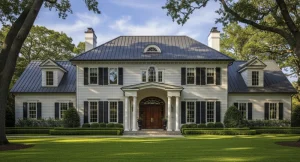
A roof replacement in Hilton Village or the North End/Huntington Heights Historic District requires a Certificate of Appropriateness from Newport News’ Architectural Review Board before the city will issue a building permit. That approval has to be in hand before the old roof comes off. Homes outside those two districts, including Denbigh’s ranch-style houses, skip historic review, but their own age brings a different set of decisions. After more than three decades on Peninsula roofs, most of the frustration we see starts with not knowing which rules apply to a given street.
Do You Need Approval Before Replacing a Roof in a Historic Newport News Neighborhood?
Yes, if your home sits inside Hilton Village or the North End/Huntington Heights Historic District, both governed by their own Architectural Review Board under the city code. Hilton Village was built during World War I to house Newport News Shipbuilding workers and was added to the Virginia Landmarks Register in 1968 and the National Register of Historic Places in 1969. The North End/Huntington Heights district covers roughly 23 blocks of homes built between the late 1890s and the years after World War II, and it was listed on the National Register in 1986. Outside those two boundaries, which is most of the city, roof replacement follows the standard city building permit process with no architectural review required.
What Roofing Materials Are Allowed in Hilton Village?
Hilton Village’s guidelines require natural slate on any original structure, and replacement slate has to match the original in size, shape, and general color range. Synthetic slate and other alternative materials can be considered on additions and accessory structures, but not on the primary historic roof. Small repairs under 20 square feet using an exact match to the existing material can sometimes get administrative staff approval instead of a full board hearing, which saves time on minor fixes. New vents and skylights aren’t allowed on roof planes facing the street; they have to go where they’re hidden from public view. Solar panels on an original slate roof are treated as harmful to the district’s character and are only considered when they can’t be seen from the right-of-way. None of this is optional guidance. It’s written into the city’s architectural review standards for the district.
What Roofing Materials Are Allowed in the North End/Huntington Heights Historic District?
The North End/Huntington Heights guidelines are more flexible than Hilton Village’s, but still require review. Replacing a roof with material identical in composition, size, shape, profile, and color can go through administrative review by planning staff rather than a full board hearing, and asphalt and fiberglass shingles count as interchangeable for that purpose. Upgrading from three-tab to architectural shingles is fine as long as the other specifications match. Anything beyond an identical replacement needs full board approval, submitted at least 30 days before the monthly meeting. Painting or coating an original shingle, slate, or tile roof isn’t allowed. Solar panels are allowed only on rear roof planes, hidden from the street.
Slate and matched shingles cost more than a standard reroof, so check real Newport News roof replacement costs before budgeting for either district.
How Long Does Historic District Roof Approval Take in Newport News?
Plan on several weeks, not days. In Hilton Village, the Architectural Review Board has up to 60 days from submission to review an application, and once it approves a request, the board has to act within 30 days of that decision. The North End/Huntington Heights board meets monthly, and applications have to go in at least 30 days ahead of that meeting, so a request that misses the deadline waits for the following month. Administrative approvals, which apply only to exact-match repairs and replacements, move faster because they skip the board hearing entirely. The practical takeaway: if a storm damages a historic-district roof, start the paperwork immediately rather than waiting to see how bad the leak gets, since the approval clock runs separately from the repair itself.
What About Older Homes Outside the Historic Districts, Like Denbigh’s Ranch-Style Houses?
Homes outside Hilton Village and the North End skip architectural review, but age still shapes the job. Denbigh’s 1970s and 1980s ranch homes, along with older craftsman bungalows scattered through the city, often have roof decking that was never built to today’s code, which can mean adding plywood sheathing or extra ventilation rather than a simple shingle swap. Homes already re-roofed once may have two layers of shingles on them, and Virginia’s building code limits how many layers can stack before the old material has to come off entirely. An experienced roofing contractor should check the decking, flashing, and ventilation before quoting a price, not after tearing into the roof. That inspection is what separates an accurate estimate from a change order halfway through the job.
How Does Salt Air and Coastal Humidity Affect an Older Newport News Roof?
Salt air speeds up corrosion on exposed metal, and it’s the flashing, fasteners, and nail heads on an older roof that show it first, well before the shingles look worn. Homes near the James River in Hilton Village weather faster than roofs further inland. Humidity adds a second problem: older attics without adequate ventilation trap moisture against the decking, which softens the wood and shortens the life of everything above it, shingles included. GAF, one of the largest shingle manufacturers in the country, builds its higher-end lines around wind performance because coastal regions wear out standard shingles faster than inland markets do. On a roof that’s 20 or 30 years old here, the shingles are often not the first thing to fail. The metal and wood underneath usually go first, and a roof that age is also old enough to fall under Virginia’s new roof-age insurance law.
What Should You Do If a Storm Damages a Historic-District Roof, and How Do You Avoid Bad Contractors Afterward?
 R.A. Woodall Roofers in Newport News VA
Document the damage with photos, call your insurance company, and start the Certificate of Appropriateness paperwork the same week, since storm damage doesn’t exempt a historic-district roof from the approval process. After any named storm reaches Hampton Roads, an area the National Weather Service’s Wakefield office tracks through hurricane season, expect out-of-town trucks offering same-day contracts and pressure to sign before an adjuster arrives. A legitimate Virginia roofer is easy to verify through the Virginia Department of Professional and Occupational Regulation’s public license lookup; any Class A contractor should show up on it. Be cautious of anyone who wants a large deposit up front, can’t produce a local address, or pushes an insurance assignment on the spot. A roofer with decades of history here isn’t going anywhere once the out-of-town trucks leave.
If you’re not sure which rules apply to your address, a certified roof inspection is the fastest way to find out.
R.A. Woodall Roofing has worked on roofs across Hilton Village, the North End, and Denbigh since 1989. As a Newport News Roofer based at 5 Heather Ln, we’ve sat across the table from shipyard families, Langley and Fort Eustis service members, and first-time buyers who just wanted a straight answer. Call (757) 290-1570 or email alan@rawoodallroofing.com for a free, no-obligation estimate.
Frequently Asked Questions
Does Newport News require a permit to replace a roof?
Yes. Most re-roofing needs a building permit, and homes in Hilton Village or North End/Huntington Heights also need a Certificate of Appropriateness first. Skipping either step can hold up your project or cause problems if you sell. Check with Codes Compliance before scheduling work.
What is a Certificate of Appropriateness?
It’s the historic district’s approval confirming an exterior change, including a new roof, fits the neighborhood’s guidelines. The Architectural Review Board issues it, or planning staff can for exact-match repairs, before a permit is issued.
Can I paint or coat an old slate or tile roof in a Newport News historic district?
No. Both districts prohibit painting or coating original shingle, slate, tile, or asbestos roofing. These materials get repaired or replaced with a matching product, not covered over. Ask about matching replacement options if the original is too damaged to repair.
How much does it cost to replace a roof on a historic Newport News home?
Historic-district roofs, especially slate in Hilton Village, cost more than a standard asphalt replacement due to material and labor differences. The exact number depends on your roof’s size, pitch, and material, so get a written estimate that accounts for the district’s requirements.
Does homeowners insurance cover roof damage from a hurricane in Virginia?
Most Virginia policies cover sudden storm and wind damage, though coverage and payouts vary by policy and by roof age. Virginia’s new roof-age insurance law adds another factor for older roofs. Review your policy before storm season, not after damage happens.
 Call Nathan Woodall in Newport News VA
You May Find These Articles Helpful
- Hurricane Season Roof Prep Checklist for Newport News Homeowners
- How to Get Your Roof Replaced Through Insurance in Newport News, VA
This article is provided for general informational purposes and reflects roofing and historic district guidelines as of September 2026. Regulations, permit requirements, and insurance policies can change, so confirm current requirements with the City of Newport News and your insurance provider before