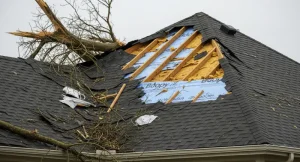
The black streaks running down so many Williamsburg roofs are almost always Gloeocapsa magma, an airborne blue-green algae that feeds on the limestone filler in asphalt shingles and thrives on shaded, humid lots. The safe fix is a low-pressure soft wash, or, if the roof is already late in its life, a replacement with copper-granule algae-resistant shingles. The one fix you should never use is a pressure washer.
We have taken this call at our office on Professional Drive since 1989. The homeowner usually suspects mold, chimney soot, or a roof that is quietly failing, and it is rarely any of those.
What causes black streaks on a Williamsburg roof?
Black streaks on an asphalt roof are colonies of Gloeocapsa magma, a cyanobacterium (often called blue-green algae) whose spores travel on the wind and settle on shingles. Once established, the colony feeds on the crushed limestone used as filler in most asphalt shingles. The black color comes from a dark pigmented coating the organism produces to shield itself from ultraviolet light. Rain carries the growth downslope, which is why it shows up as vertical streaks instead of random spots. The Asphalt Roofing Manufacturers Association identifies Gloeocapsa magma as the most prevalent species behind roof discoloration and notes the problem is most widespread along the Eastern Seaboard, the Gulf States, and the Northwest. On its own, algae is mostly a cosmetic problem. The colonies do hold moisture against the shingle surface, though, and a roof that stays damp longer tends to age faster than one that dries out quickly.
Why do shaded Peninsula lots get it so much worse?
Shade and lingering moisture are exactly what algae and moss need, and many Williamsburg lots supply both. Neighborhoods like Kingsmill, Ford’s Colony, Governor’s Land, and Druid Hills were built under mature pine and hardwood canopy, so north-facing slopes may get direct sun for only a few hours a day. Morning dew sits on those shingles well into the afternoon. Add the humidity coming off the James and York River corridors and the long, warm summers of the Historic Triangle, and a shaded roof can stay damp for most of the growing season. Because spores ride the breeze, one streaked roof on a cul-de-sac tends to seed its neighbors. The same shade also invites moss, which is the bigger worry: algae lies flat as a stain, but moss grows in thick cushions between shingle tabs, lifts the edges, and wicks water underneath. Homes in more open developments along SR-199 or in New Town usually streak later and more lightly because their roofs dry faster.
Why does pressure washing destroy asphalt shingles?
Pressure washing destroys asphalt shingles because it strips off the mineral granules that protect the asphalt from sunlight, and those granules cannot be put back. The granule layer shields the asphalt from UV breakdown and gives the shingle its color and fire resistance. A pressure washer aimed at a roof blasts those granules loose, can force water up under the tabs, and can break the adhesive seal strips that keep shingles flat in high wind. The roof may look cleaner for a few weeks, but it has given up service life it will never get back, and the bare spots often streak again faster than before. The Asphalt Roofing Manufacturers Association is blunt here: high-pressure washing is likely to damage asphalt roofing and should not be used on it for any purpose. If someone has already pressure washed your roof, look for heavy granule loss in your gutters and downspouts, one of the clearest signs the shingles took real damage.
Can pressure washing void my shingle warranty?
It can leave you without coverage for the damage it causes. Shingle warranties cover manufacturing defects, not damage from improper maintenance, and manufacturers publish care guidance that rules out high-pressure cleaning. GAF’s technical bulletin on algae staining, for example, recommends a cleaning solution followed by a low-pressure rinse and cautions that cleaning methods which dislodge granules can lead to premature shingle failure. If granule loss, lifted tabs, or a leak shows up after a pressure washing, a manufacturer reviewing the claim is likely to treat it as owner-caused damage rather than a product defect. The same logic applies to any algae resistance warranty you may have on newer shingles. Before anyone puts a wand on your roof, pull out your warranty paperwork and read the maintenance section, or call us and we will help you find it. It takes ten minutes and can protect a five-figure investment.
What is soft washing, and does it really work?
Soft washing is the roof-safe way to remove algae: a cleaning solution, usually diluted sodium hypochlorite mixed with a surfactant, is applied at roughly garden-hose pressure, left to work for a short dwell time, and rinsed gently. Instead of knocking the growth off with force, the solution kills the colony where it lives, and the streaks fade as the dead algae washes away over the next few rains. A careful crew also soaks and rinses shrubs and foundation plantings so runoff does not burn your landscaping. Soft washing works well on shingles that still have good life left in them. Its limit is that the results are temporary, a point ARMA makes itself, and on a heavily shaded Williamsburg lot regrowth within a few years is common. Because a wet roof is slick and dangerous, hire this out to an insured crew that commits in writing to low-pressure methods.
When does it make more sense to replace with copper-granule shingles?
Replacement with algae-resistant shingles makes more sense than repeated cleaning when your roof is already in the back half of its life or showing wear beyond the streaks. These shingles have copper blended into the surface granules, and each rain releases trace amounts of copper that keep algae from taking hold. You can see the principle on older roofs, where a clean stripe runs down the shingles below copper flashing. Owens Corning’s StreakGuard Algae Resistance Protection uses copper-lined granules developed by 3M and carries a 25-year algae resistance limited warranty on lines such as Duration and Oakridge, provided approved hip and ridge shingles are installed with them. Before deciding, get a certified roof inspection so you know whether the shingles have enough life left to be worth cleaning. If your community has an architectural review committee, a color change will likely need sign-off, so read our guide to HOA roofing approval in Ford’s Colony, Kingsmill, and Governor’s Land before you choose a shingle.
Should I clean my roof or replace it?
Most Williamsburg homeowners land in one of three situations:
- Streaks only, shingles flat, granules intact: a professional soft wash, repeated every few years on a shaded lot.
- Moss cushions, lifted tabs, or soft spots underfoot: inspection and repair first, because cleaning will not fix shingles already letting water in.
- An older roof with granule loss or curling: put the money toward copper-granule shingles instead of cleaning a roof you are about to tear off.
This is the conversation we have most often as one of the local roofing contractors williamsburg city va homeowners have relied on for more than three decades. If you are not sure where your roof falls, we will climb up, look honestly, and tell you whether it needs a cleaning crew or a roofer. Call (757) 220-6299 or email alan@rawoodallroofing.com for a free, no-obligation estimate, or see our Williamsburg roofing service page.
Frequently Asked Questions
Will a bleach solution kill roof algae for good?
A properly diluted bleach solution applied at low pressure will kill the existing colony, but it will not stop new spores from landing. On shaded, humid lots, the streaks typically return within a few years unless the roof has algae-resistant shingles.
Does homeowners insurance pay to remove roof algae?
Generally not. Insurers usually treat algae and moss as routine maintenance rather than sudden damage. Review your own policy, but plan on algae removal being an out-of-pocket cost.
Can I just leave the streaks alone?
Algae streaking by itself is mostly cosmetic, so it is not an emergency. Moss is different and should be dealt with, since it can lift shingles and let water underneath.
 Nathan and Alan Woodall – Family Roofing Business for 39 Years in Williamsburg VA
Related Reading
You may find these articles helpful:
- Virginia’s New Roof-Age Insurance Law: What It Means for Williamsburg and Newport News Homeowners
- How to Choose a Roofing Contractor in Williamsburg, VA: The Questions That Actually Matter (2026 Guide)
Disclaimer: This article is for general information only and is not a substitute for an on-site roof inspection. Warranty terms are set by each manufacturer and may change, so review the current documents for your specific shingles.